Reasons You Should Consider Becoming an Entrepreneur - how to become an entrepreneur at 18

To some people, it is a sermon. There are however, a group of people reading this that are trying to decide if they should make the leap into entrepreneurship.

Entrepreneurship isn’t for everyone, but if you do have the bug to experience freedom and still generate income, entrepreneurship can lead to an amazing life. You get to set your own schedule, you get to call the shots and answer to yourself.

Each of us spends 40-plus hours of our week in some form of work. That time could be spent doing something you love or doing something that makes you miserable and affects all other areas of your life. Here are five reasons why you should consider spending those hours on something that’s yours.
Related: 50 Signs You Might Be an Entrepreneur

1. The opportunity to control your destiny.

When you work a 9-to-5 you’re at the mercy of your boss and the company you work for. They can decide to hire or fire you, they decide how you spend your eight hours every day and what happens in those eight hours affects you beyond that time.
You have little control and in exchange, they give you a paycheck. The problem is today’s economy. Gone are the days of working at a company for years and retiring with a pension. These days entrepreneurship is the new pension plan. Your income is too important to leave in the hands of someone else.

2. Freedom to spend your time doing what’s important to you.

Life is short and time is the one thing we’ll never get back. This makes time one of your most valuable resources and you should treat it accordingly. Entrepreneurship gives you the ability to balance your time.
If you have family or other life circumstances come up, you can decide to forgo any work for that day. You don’t have that kind of flexibility at a job. Your work should fit into your life, not the other way around. The life part has to come first.

3. Unlimited earning possibilities.

At a job, your earning potential is set by the job or a contract a union negotiated. You can get raises and promotions, but those are the exception, not the rule. Your earning potential is capped no matter how long you stay at that job.
To be fair, you could earn nothing at your business, but those who jump into entrepreneurship are self-motivated to build a profitable business. Entrepreneurs aren’t happy with the status quo and continue to grow their business and income. The beauty of entrepreneurship is that there are no gatekeepers to keep your income regulated.
Related: You Might Be an Entrepreneur If You Meet These 3 Conditions

4. Location independence.

The beauty of having your own business is the ability to create something that supports you no matter where you are in the world. There are more than 2.5 billion people online daily, which means you could have an unlimited customer base and build a location-independent, online business.
No longer do you have to be tied down to any one location. You can have freedom to be where you want. This is great because different environments can foster innovation and creativity. Last year I got to travel to 12 countries all over the world and still made money. You just can’t beat that.

5. The chance to leave a lasting legacy.

When you build your dream business it can carry on to your kids and their kids. What starts as a quest for freedom can end as something that’s in your family for generations. A company like Ford has been passed down through the generations and continues to impact lives.
If your business is started out of something your passionate about, that passion will impact lives for years and generations. You can leave your children something you’re proud of.

13 Reasons Why Education Transformation Is Slow, Challenged

Recently, Modern Learners wrote a piece about pending educational transformations. Naturally, this is not a new topic. Many have predicted sweeping change before. However, this time, the author indicates that it’s going to be different. (See complete article here: https://modernlearners.com/why-this-time-is-different/)
12334-John-C-Maxwell-Quote-Change-is-inevitable-Growth-is-optional.jpg
The article’s initial contention has always been mine. The question is asked: “Given the number of books that have been written and papers that have been presented around  school change over more than 50 years by some very well informed and esteemed writers, why has there been so little change in schools and why do you think it will be any different this time ?”
First of all, I hope the writer is right. I would love nothing more than to see our entire educational system truly evolve and adapt into real 21st century models relevant to today’s students, economy, culture and technology. The problem is that my shoulder angel and devil are battling it out. It’s classic optimism vs. traditional pessimism.
Since I began teaching in 1990, there has been an on-going reform movement, in many cases discussing many of the same things, but truly little has changed. We have been hearing terms such as relevance, engagement, application, higher level thinking, personalization, technology for a long time. And yet, when one looks closely, very little has changed overall in terms of our educational system and culture.
Screen Shot 2017-08-08 at 12.31.46 PM.png
In addition to the question above, I would also add to that list thousands of keynote speakers, blog posts, consultants and conference sessions. All have been calling for sweeping change, while often presenting the path on how to do so.
The thesis here is that we are now in the perfect storm - educationally, politically, economically, culturally, technologically - for real change to occur. My shoulder angel wants to believe, but my shoulder devil is struggling to find the confidence. I agree that we are in unprecedented times and it seems the time is riper than ever for real change. But in addition to the factors being in place that are referenced above, I think there are still too many things in the hearts, minds and souls of all the stakeholders that will derail us once again.


Screen Shot 2017-08-04 at 8.49.00 AM.png
Here are my 13 reasons why education will continue to be challenged when it comes to change:


  1. Our Cultural Definition Of School - A True Learning Organization?

schoolculture29.jpg
As a culture, we tend to not truly look at school as a place of learning. We want to, we pretend to and we come close to at times. But truly our definition of school, especially high school, is really not about a culture of learning. Ask most parents and students about what their expectation of high school or what they are looking forward to. You’ll get more responses about athletics, co-curricular, extra curricular, dances and so on than you will about real learning. Sure, Don’t get me wrong. I love things that are fun and social. But why can’t our learning be fun and social? Why can’t the learning be so compelling and transformational that it’s all we talk about? Since it’s often not, we use the other things (extra and co-curricular) to do that for us. We cannot continue to design and base our schools on the extra - we have to make the meat the best part. We somehow need to establish with all stakeholders what our purpose is what will take priority. Culturally this will  be difficult as we have allowed school to be defined dozens of ways - and it’s now time to make sure we are truly focused on creating happy, creative, inspired lifelong learners of all students. Anything else or less will not suffice.


  1. Parents
zuhfh.jpg
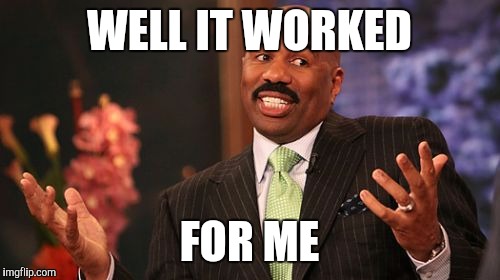
Some parents are aware that schools needs to change. They are aware that world is rapidly changing and school should reflect that. However, too many parents want school to be like what they know and experienced. Saying things like “it worked for me” in regards to homework, discipline, lack of student voice and choice, outdated pedagogy, etc. are not an answer to what our students need to be successful today and especially tomorrow. Parents need to also put learning, real learning, at their top of their school/education agendas (see #1). Parents need to become more informed about the new economy and globalized world in which our students are entering.


  1. Students
StudentVoices3-780x350.png
It would be so easy to leave students off of this list. Indeed, they are really victims of a system that has not evolved as much as they have...or even the world has. However, the potential for them to have an impact is incredible. Many students are dissatisfied with their school and educational experiences. However, they, like most of us, need to turn complaining/whining into advocacy. It’s their education and their futures, so they should be the most important voice. Students need to learn to intellectually demand what they want or need from their schools. And they need to do this to parents, teachers, administrators, school board members, community leaders and anyone who may listen willingly or not. I think when the majority of students truly demand something better, the tipping point will occur. Indeed, students do have more educational options that ever before. They are also more savvy, connected and capable than ever before. Apathy needs to be converted to Advocacy.


  1. Teachers
960.jpg
Teachers are obviously integral, and maybe the most important, when it’s all said and done in terms of what our schools are truly like. There are many things that have worked against teachers  that have been out of their control - class sizes, bureaucracy, weak leadership, funding, initiative fatigue and more. However, there are things that are in their control, for the most part, that they need to begin to lead. I don’t want to argue for or against teachers’ unions. That being said, it seems that weak, or even criminally negligent teachers, have been allowed to survive. Almost every school in America has a teacher or two that the entire staff knows is bad for kids. But somehow, we have learned to tolerate and accept this. Just like law enforcement, we have to be responsible for our own. We have to collectively and collaboratively address those teachers. They need to get on board or get out. You know who they are and so do they. They give the profession a bad name and we can’t afford that any longer. We need to redefine the role of a teacher and celebrate how wonderful it can be. If we do, maybe more will go into the profession. Teachers need to take charge and become their own curriculum creators, curators and advocates. If they continue to teach to a textbook or test, they can’t help to get what they get.


  1. Administrators
download.jpg
We have been asking our administrators and site leaders to be instructional leaders for several years now. However, too many are not. Too many administrators focus on facilities, discipline, extra curricular, etc. Many are not even interested in curriculum & instruction. Many were not teachers for very long. Many were not distinguished as a teacher at all. Too many are disconnected from professional development, technology, lifelong learning, professional learning networks, modeling and so much more. Despite the poor examples of leadership that we are often seeing in the current political environment, school leaders need to read, study and model themselves after successful 21st century leaders in industry. They need to practice and preach openness, accessibility, flexibility, bottom up approaches, democratization and so much more. Site leaders need to be the living examples of fearlessness, risk taking, innovation, experimentation, early adopters, pioneers and cage rattlers.


  1. Models
ravitch_1-030812.jpg
In the end, we have few models to look to for in terms of change and inspiration. Yes, they are there. Yes, there are charters, choice schools, magnets and others that are doing many things right. But the dominant model of comprehensive education is outdated. And we tend to perpetuate or clone the outdated model. Most schools are similar more than they are different. It is changing and there more models than there were 20 years ago. Indeed, efforts like the XQ Super School Project (https://xqsuperschool.org/) are steps in the right direction. But we need to see examples across all communities, all districts and ultimately we need to challenge/incentivize one another to create new examples that are truly unique/responsive. We can’t look to higher ed as they are even more behind. Checking out Finland is great, but we need to see more models here in every neighborhood. Every district and community should be creating innovative, unique programs to help individual students and the entire system.


  1. Innovators Go Elsewhere
AAEAAQAAAAAAAARdAAAAJDNlY2I4YmU3LTk1ZjItNGFhYS1hNzU3LWY5MDk5YjFkZDI2Yw.jpg
We might preach innovation and creativity, but we tend to marginalize both teachers and leaders who are ‘pushing the envelope.” Indeed, some of them leave education altogether and many are beaten down to conform. We need to talk less and walk more. If we want innovation and creativity, we not only need to model it, but we need to embrace, chase it and challenge it. Compounded by a national teacher shortage, we’re going to need to redefine the education profession and attract young people who are, by nature and experience, entrepreneurial, innovative, creative, fearless and self-starters.


  1. The Colleges & Universities
univ.jpg
Too much of our system, especially our secondary system, takes its marching orders from the colleges and universities. Even though our college graduation, completion and success rates are dismal, they dictate the requirements, expectations and compliance items to our high school. Less than half, in most cases far less, of our high school graduates start go straight to the a university. So why do we have the university dictate our curriculum. Ironically, a large percentage of our higher ed. Instruction is further behind than K-12. Their dominant instructional model is still lecture and note taking - truly the lowest form of learning for students. Since a K-12 education is the expected standard for all, then that should be the priority and design a better system from within. Higher Ed. needs to listen, collaborate and follow a whole lot more.


  1. Compliance
Robert-Half-Manaement-Resources-Financial-Services-Compliance.jpg
Like so many entities in our systems, we spend more time on compliance that we do on the Four C’s, pedagogy, student relationships, school culture, community connections and so many others. Seems like most things we do in order to deliver a standard, right or expectation ends up becoming its own bureaucracy. Think about Special Education, 504’s, ELL, Accountability, Attendance, Accreditation and so many more. Intentions are good, but implementation and practice become something else. Have we asked our schools to do much? Possibly and probably. But beyond that, what is our focus? What are in the business of doing in school? Until we can all answer the question together, we will focus more on compliance vs. learning. We need to radically simplify oversight, documentation and accountability.


  1. Size


class-size-300x240.jpg
Many of our high schools today have class sizes in the 40’s. Simply, we all know that smaller is better. High Schools with 700 students have different cultures and opportunities than those of 3,000. Classrooms with 25 have a very different culture typically than those with 45. And yes, fixing this is easier said than done. Yes, it may cost more. But the cost of not fixing it is astronomical. If you want all students to be engaged, participating and have effective feedback, then we cannot expect a teacher to facilitate five or more classes of 40+. We know we need personalization, project-based learning, students producing high quality and public work, technology integration, real world applications and community interaction, work-based learning and more. However, if we continue to put 40+ in our high school classrooms, the more we will continue to not deliver on our promises and continue to set up our rooms for lectures and note taking.


  1. The Buildings & Physical Spaces
cribs.jpg
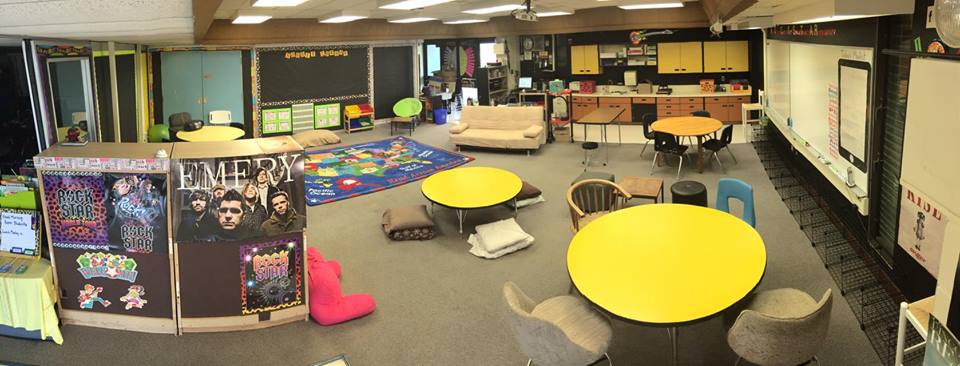
Remember that our schools were originally designed to be ‘institutions.’ I know that we cannot build entirely new schools everyday. However, we also don’t need to live with buildings and classrooms that haven’t changed in 50 years. Do we need the same old dreary rooms, hallways and offices? How many of us are excited to walk into our school buildings? Are they comfortable and inviting? One, we should invest in our spaces. Two, if we build new schools, we can do them smarter. Instead of building the $200 million high school complex, we could build 15-20 small schools that are unique, specialized and contemporary. There has been a recent focus on classroom design and it’s the right direction. It’s another area where we may want to ask the customer (the students) what works best for them. I can tell you desks in rows are not on the menu.


  1. School Boards
jeffco-recalled-boe_1446610908934_26204529_ver1.0_640_480.jpg
Local control and leadership of our schools is in theory great ideas. Our communities should have the right to create the best and most unique schools. Ironically, most of our schools don’t differ very much. Indeed, too many are just clones or duplicates of schools in their neighboring district. It seems like too many school board members may be there for the wrong reasons. Too many are their for their own political career advancement, own political agendas and pet projects. School board candidates need to be truly unselfish individuals who care about the kids in their community and want to work collectively to have something better, more innovative and more relevant than ever before. Status Quo people can run for church fundraising chair or local lodge leadership, but not for the people who have the fate of our future in their hands.


  1. Our local communities and leaders.
image.jpg
Schools are not going to be the exceptions in our communities. If our communities are disconnected, violent, poverty-stricken, in disrepair or worse, how can we expect our schools to be different or the shining star on the hill? Schools need to engage the larger community in every way and local community leaders/advocates need to engage with the schools diligently.


Hoping The Aforementioned Writer Is Right, Hoping That I’m Wrong

I truly want my shoulder angel to win. I see lots of signs and reasons to be optimistic. But my experience, as well as awareness of the challenges, often give my shoulder devil much to smile about.

(photos courtesy of foter, pixabay, shutterfly, allthefreestock)

HOW TO OPEN AND START A BLOG


Ever thought about launching your own blog? 


Ever wondered what it takes, not only to start up that blog, but also to successfully build it over time to make money online or generate a passive income? Clearly, you're not alone. Millions of people try their hand at blogging, but so few actually ever generate a substantial income from their efforts.
However, if you're starting a blog for the purposes of making money, and you're not actually passionate about writing in the first place, then you're largely wasting your time. The art of blogging isn't simply scientific or formulaic. Without a deep-seated passion for your craft, you'll face a tide of frustration and upset.
Why? While it's relatively straightforward to begin a blog, it's a monumental undertaking to generate any semblance of traffic and profit from your arduous efforts. You need laser-focus and persistence to build an audience or reach mass saturation with your prose. It takes time and it takes long and drawn out evenings burning the proverbial midnight oil.

Take it from me. As a blogger who's built a substantial platform with hundreds of thousands of monthly visitors, I can bask in the warm glow of success. However, I can't sit around for too long enjoying the freedom and passive income that my blog has created. Without constantly adding insatiable content, any blog can die off.
So, what does it take to start a successful blog and actually make money online? I suppose that depends on what you consider successful and what you consider making money. If, like millions of other potential bloggers out there, you're looking to rake it in, you'll have a long road ahead.
But if you're willing to put in the time and the effort, and you can stay persistent over the years (and yes, I said years), then you can most certainly generate a substantial income online. In fact, your blog is quite possibly one of the best hubs of passive income generation, and if done the right way, it can attract the right clients and customers no matter what industry or niche you might be in.
Related: 4 Ways to Stock Your Content War Chest

How to Start a Blog: Step-by-Step

Okay, if I haven't dissuaded you just yet, and you're serious about launching the next Mashable or TechCrunch or whatever other blog you might think is wildly successful in your eyes, then here's what you need to do in a step-by-step fashion. The more you prepare and plan, the more likely you'll be to succeed in the long term.

1. Pick a Topic 

Get clear on what you'll write about. Define a topic or niche, and design all your content around those things. This will help you to not only laser-focus your writing, but also to build digital products and services that compliment your content.
This allows you to attract customers in, enticing them with your highly-informative posts, then tempting them with a lead magnet before dropping them into your sales funnel (more on that shortly).

2. Select a Platform

While Wordpress is the most popular platform for blogging by far, there are others out there that can be leveraged such as a micro-blogging platform like Tumblr, Blogger.com and even Medium. However, if you're serious about your blogging efforts, you'll likely want to go with a self-hosted Wordpress installation on a custom domain.
While you could setup a blog at Wordpress.com with a subdomain such as myblog.wordpress.com, you'll get more traction with a self-hosted solution, and then be able to use subdomains on popular platforms for your content-marketing efforts.
Related: Medium Is the Solution If You Want to Blog Without Any Overhead

3. Pick a Domain Name

Custom domain names are important if you're serious about making money from the blog you start. Rather than relying on a third-party-hosted subdomain, find a short but relevant keyword-rich (if possible) domain name that's descriptive of your intended topic, industry or niche. Use BlueHost, HostGator, 1&1 Hosting or any other number of domain name providers to source your domain.
If you're at all concerned about things like SEO, when selecting your domain name, you should adhere to the following suggestions:
  • Use a known top-level domain (TLD) such as .com or .net
  • Keep the domain short, no more than 15 characters or so
  • Try not to purchase a domain name with hyphens, since they're more often associated with spammers
  • Avoid using self-hosted subdomains to rank or categorize posts
Related: 21 Ways to Market Your Business Online

4. Find a Good Web Hosting Company

There are loads of good hosting companies out there. If you're starting a Wordpress, self-hosted blog, there are a near-endless amount of options. The important thing is to do your due diligence and pick the right one that's suitable to your budget and to ensure that the service-level and up-time guarantee is there.
At the beginning, you'll likely want to start out with either a Managed Wordpress solution or a Virtual Private Server (VPS), and scale from there. Eventually, you'll probably need a dedicated-hosting solution with a CDN (below) once you break through a few thousand visitors per day.

5. Caching and Content-Delivery Networks (CDNs)

Use a system like W3 Total Cache or WP Super Cache and turn on browser caching to ensure that you speed up the delivery of your webpages. In the beginning, this might not seem as important. But as you grow and your traffic increases to thousands of visitors per day, this will be critical. Use Google's Page Speed Insights to test things before and after the installation.
It's also important that you setup a CDN, which will speed up the global delivery of your content. For example, your page might load relatively quickly in the United States, but what happens when someone in Australia tries to load your content? CDNs replicate data across multiple repositories around the world, and make content delivery ultra-fast.
This is important for the user's experience because most people who are foced to wait even a few seconds for a page to load, often abandon the website and go to the next one in the search results. W3 Total Cache integrates with Amazon's AWS and MaxCDN, two very good options when it comes to CDNs.

6. Enable Permalinks

In Wordpress, you should enable permalinks before getting things off the ground, which will give you nice canonical URLs that are SEO-friendly. Permalinks are located within the settings > permalinks section of your Wordpress admin and select the post name option.
Related: 10 Smart Ways to Earn or Build Backlinks to Your Website

7. Install the AMP plugin

The Accelerated Mobile Pages (AMP) Project is an initiative by Google to speed up mobile accessibility to a large degree of their content. The AMP specification, which you can read more about here, helps to thin down a webpage to its basic structural components with scaled-back JS and minified CSS code, makes for lightning-fast page speeds.

8. Install Google Analytics

Install Google Analytics so that you can keep track of your efforts while building out your blog. This is a great way to keep track of your results while using the URL campaign builder when dropping links in social media and other places so that you can effectively determine where your traffic is coming from.

9. Setup Google's Webmaster Tools

Anyone who's serious about building a blog and making money, needs to leverage Google's webmaster tools to see what keywords they're ranking for and any messages that would impact their ability to rank. This will also allow you to submit an XML sitemap and track keyword impressions along with click-through rates. This is one of the most useful tools for growing your site or blog through constant analysis of your efforts.
Related: Why Your Startup Content-Marketing Strategy Isn't Working

10. Learn SEO the Right Way

Although you shouldn't start a blog with the intention of optimizing it to oblivion, you most certainly should understand the fundamental principles of search engine optimization so that you pay attention to the key aspects that will impact your ability to rank on search engines like Google. Begin with Google's Webmaster Guidelines, and digest and implement that information. Learning SEO is a long and drawn out journey. You should always be increasing your knowledge and expanding your skill set.

11. Regulary Build Useful Content

If you're serious about succeeding with your blog, you need to build useful anchor content. It needs to be engaging, keyword centric, insightful, unique and well written. Don't write your content for search engines. Rather, write your content for humans while also paying homage to search engines and what they want. Simply put, it's a skill that develops over time with practice. It's also important to regularly publish your content on a weekly basis.

12. Sign Up to an Email Marketing Platform

The best avenue for making money from your blog is through email marketing, plain and simple. Hands down, this offers one of the quickest and surest strategies for earning an income through your blog. But before you get there, you need to sign up to an email marketing platform like Aweber, ConvertKit, MailChimp, Constant Contact, InfusionSoft or any other number of platforms that exist out there.
Related: 4 Golden Rules to Boost Blog-Post Engagement

13. Build a Lead Magnet

If you're serious about marketing anything online, rather than opting for running ads on your blog (which won't make you real money unless you have at least hundreds of thousands of visitors per day) or engaging in affiliate marketing, you should build a topical lead magnet that will sell a digital product or offer that you create in the back-end. The lead magnet will entice people to sign up to your list and provide you with their email address.

14. Build a Digital Product and Position Your Offers

Email marketing and lead magnets are all designed to help you build out an automated sales machine. However, you need a digital product, service or other kind of offer in the back-end to do that. You can create multiple offers or products, that can lead people up a value chain towards your high-ticket sales.

15. Create a Sales Funnel

Take the time to build your automated sales funnel. There is so much involved with sales funnels, but the basic premise is that your visitors will show up to your site by discovering your content, drop into your sales funnel through an offer via your lead magnet or some other tripwire, and they'll then be led through a journey with drip-fed messages at some periodic schedule that will allow you to sell your products and services on autopilot.
Related: How This Entrepreneur Created a Premier Women's Lifestyle Website

16. Get Social

Building a blog isn't easy by any measure. To help you along the road towards success, you have to get social. Not only by linking up with other like-minded bloggers interested in online marketing, but also by sharing and engaging with others on social networks like Facebook, Instagram and other social media platforms.


17. Market Your Content

The single most important strategy you'll find for building up a blog and boosting your visibility on search engines like Google, and my all-time go-to strategy for rocketing up the search rankings on Google's SERPs, is content marketing. Marketing your content is an intricate process that involves long, seemingly-never-ending hours of building more useful off-site content that links to your primary anchor content, but it's well worth it.
You can use this single strategy to rank number one on Google's searches for nearly any keyword if it's done the right way. There's most certainly an art to this as well as a technical outline and to doing it the right way. Don't try to spam or overstuff keywords in an effort to market your content by any means.
Content marketing can be done with articles on sites like Medium.com or Scribd.com, it can be done by answering questions on Reddit or Quora, and it can be done with videos on YouTube or Vimeo, along with a variety of other means. The point is that all of the content has to be useful, period. Don't try to do the least amount of work for the greatest return. You need to do the exact opposite if you want to succeed.

How to Make Money on Fiverr (How I Make $4000 a Month)

 Drawing, Designing, Graphics, Art, SEO, Article, music and audio, digital marketing, fun and live-style, 


How i make up to  4000 dollar (1261000 naira 


I joined Fiverr https://michaeltrendz.blogspot.com.ng/ on September 2015 and have generated over 6 million naira from it.

Prior to joining, I used to get angry with my friend who was a freelancer on Fiverr.
 
We were running an offline joint-venture business back then. Every minute he could steal from time, he will quickly log in to Fiverr to do what I didn’t know.

Back then, I always saw Fiverr as a $5 marketplace and I couldn’t imagine how he would always dedicate more time to his Fiverr account instead of our offline business which was making us good money…..(so I thought).

I didn’t miss any opportunity to make joke of him for slaving away on Fiverr and he wasn’t deterred at all by it……possibly he’d be laughing at me in his mind.

It was not until my fiancé finished school and was looking for what could keep her busy that the veil covering my eyes was removed.

I told my friend to teach her Fiverr so she could keep herself busy with it.

Her first month on Fiverr, she made $450.
That was huge compared to the time she spent on it.

It was then that I knew that there was something big happening in Fiverr and that was possibly why my friend gave good attention to it.

This was in 2014.

Fast-forward to 2015, our joint venture business started going down and I needed another supplementary income lest I go hungry.
My friend told me to come over to Fiverr and I lazily agreed.

My first month on Fiverr, I made $950……double of my income in the offline business I was running.

What really drew me in wasn’t really the money, but the fact that I wasn’t bothered about overhead, paying staff, going on marketing, etc. I just stayed back in the office, worked few hours per day and that was all.

I became really obsessed with Fiverr that I had to close down my offline business to focus on Fiverr…..that was very silly to many people, but it wasn’t to me.

Fast forward to 2017, I have earned as high as $3,000 in some months, with my lowest month being $850.

I want to share five important lessons I learnt from Fiverr. I believe if you learn it from me and apply it, you can earn a full time income, bigger than what many WORKING CLASS people earn.

Here are the five lessons:

1.     More money is made in the upsell:

If you are in the internet marketing space, you will understand the importance of upsell.

Let me use a practical example to explain what an upsell is.

When you order a product from Amazon or Ebay, you would see something like: “those who bought this product also bought this”.

The try to show you other products you might possibly need based on your current purchase. They know you are still in the mood of buying and so may possibly buy more.

With this, they make more money from you while they can.

The same thing applies to Fiverr.

Each service you render on Fiverr will invariably have lots of interrelated service.
For example, I’m copywriter on Fiverr and I know that anyone who hires me to write the content of their sales page, will invariably need email copies and squeeze page copies.

So when you place the order for a sales page copy, I will quickly respond to you, thanking you for placing the order and recommending those other services to you. I won’t just recommend, I will tell you reasons why you need them if you want to maximize your sales and conversion.
Most times, the client agrees because they just bought and so I’ll make more money than I would have normally gotten from the client.
This has enabled me earn up to $700 from a single client in one order.

You can also apply this and see how your revenue will increase, even when your client base is not increasing.

Another method of using this is through gig extras.
Add all those upsells in your gig extra so the buyer can easily see it and make a choice. 
If they don’t, then you communicate and convince the buyer yourself as I described above.

2.     Don’t rely on Fiverr traffic

Fiverr sure has a lot of traffic that can help you get sales. But if you are serious about growing your sales and revenue, you don’t need to rely on Fiverr traffic.

The millions of traffic that Fiverr gets monthly is not for you alone. It is meant to be shared among the thousands of freelancers they have on their platform.

What is the probability that you will get a good chunk of that traffic to your gigs?

Of course, you can use some Fiverr SEO tactics to receive more visits to your gigs, but you should bear in mind that Fiverr algorithm for gig ranking keeps changing too and what you did today to get yourself ranked, might make you enter the second page by tomorrow.

Many top sellers on Fiverr have been hit by these algorithm changes, so you are not immune to it.

The best thing for you is to optimize your gig for Fiverr searches and in addition, get more traffic direct to your gig from outside Fiverr.

Use social media, forums and even paid ads to get more targeted traffic to your gigs.

Trust me that many business owners don’t even know about Fiverr. When you reach out to them through these platforms and let them know they can get a high quality service at a cheaper price on Fiverr, they will quickly move to it.

37% of my Fiverr revenue comes from clients who saw my gig from outside the Fiverr platform.

You can also use this tactics to make more sales and revenue even if Fiverr changes their algorithm every day.

3.     Bidding early matters a lot…being 10th or down isn’t cool

On Fiverr, I’m not just a seller (freelancer), I also buy services there too. So I have had the opportunity of seeing things from both the buyer and the seller end.

When you visit the buyer request section, you will see over 20 sellers bidding on a single project.

For the buyer, they are usually overwhelmed with requests and so they end up interacting with the first 5-10 bidders. The buyer might even make a buying decision from the first or second bidder.

What this means is that if you want to increase your chances of getting the job, make sure you frequent the buyer request section and always bid on request as soon as possible so that you will be among the first five persons to bid.

That way, the buyer may see you and consider you among his options when making a buying decision.

Additionally, make sure your bidding proposal stands out with its content, else the buyer will just ignore your post and go for other bidders.

4.     Your gig package is meant to hoodwink the seller to pay more

Fiverr introduced the gig packages last year and that to me is one of the best updates they have done since I joined them in 2015.

The three gig packages enable you to charge your clients higher amount for more services. It’s meant to make your buyer prefer to pay higher hoping to get more quality at lesser amount.

For example, if you offer article writing services, your basic package could be 100 word SEO article for $5. The next package would be 500 words for $15, while the third package would be 1000 words for $25.

This way, your client would think that 1000 words is the best since he will get more value (1000 words) for less ($25 instead of $50). So they will probably ignore the $5 and go for the $25.

This is how I package my gigs to make the buyer happily pay more.

Repurpose your gig packages so that your buyers see more value in paying you more.

5.     You must see Fiverr as a real business

One of my most favorite business quotes is this: “if you want your business to give you full time income, then you must give it full time attention”.

If you want to make a sizeable income from Fiverr, then be ready to see and treat it like a real business.

By this, I mean that you should spend good enough time getting new customers both within and outside Fiverr platform. You should also endeavor to over-satisfy your clients by delivering quality service on time all the time.

Quality and on-time delivery will lead to your clients referring you to their friends offline….it has happened to me multiple times.

Even though, I now work less on Fiverr (I don’t drive external traffic to my gigs and I don’t even visit the buyer request section again) due to other internet businesses I’m trying to learn, I still get a considerable amount of sales and revenue from Fiverr.

Fiverr is not just a place for $5 jobs; you can make a full-time living from it if you will take time to learn more about it in addition to the lessons I just shared with you here.

If you want to do it 

Good luck to you.

sign-up now for free