federal university of agriculture resumes..


Federal university of Agriculture abeokuta, confirms monday 13/032017 as their academic resumption date.
   This resumption tense to welcome all the fresh student to the 2016/2017 accademics calender.
after different series of  objections and disapproval of student act last section, due to the un-accepting behavior of some bad acts, i.e ROBBERING, THEIVING , and PROPERTY DAMAGES which lead to a 2 month internal strike. the academics planning commite in their meeting re-schedule the resumption date from febuary 24, 2016 to march 13th 2017, the student are rightly contented with the resumption dates.
Meeting helded last section so as for the school to fight against all insurgencies happening in and out of the school premises.

Welcome back to school
😑😑💗FUNAAB student
credited to unaab.edu.com.ng
Read more »

SCHOLARSHIP UDATE

Last updated: 06 Mar 2017 |

IOE Centenary Masters Scholarships

IOE/ISHMasters Degree
Deadline: 10 Apr 2017 (annual)
Study in: London, UK
Course starts October 2017

Transform Together Scholarships for International and European Union (non-UK) Students

Sheffield Hallam UniversityBachelors/Masters Degree
Deadline: 31 May 2017 (annual)
Study in: Sheffield, UK
Course starts Sept 2017

Vice-Chancellor’s International Scholarships at University of the Arts London

University of Arts LondonMasters Degree
Deadline: 31 May 2017 (annual)
Study in: UK
Course starts September 2017

Westminster Full-Fee Masters Scholarships for International Students

University of WestminsterMasters Degree
Deadline: 4 May/13 Oct 2017 (annual)
Study in:  UK
Course starts Sept 2017/Jan 2018

Edinburgh Global Online Distance Learning Scholarships

University of EdinburghMasters (MS) Degree
Deadline: 2 June 2017 (Annual)
Study in:  any Country (online)
Course starts Sept 2017

Australia Awards Scholarships

Australian GovernmentBachelors/Masters/PhD Degrees
Deadline: 30 Apr 2017 (annual)
Study in:  Australia
Course starts 2017

Heinrich Boll Scholarships in Germany for International Students

Heinrich Boll FoundationMasters/PhD Degree
Deadline: 1 Mar (annual)
Study in:  Germany
Next course starts 2017

Humber International Entrance Scholarships

Humber CollegeUndergraduate Degree
Deadline: 19 May 2017 (annual)
Study in: Canada
Course starts Sept 2017

Université Paris-Saclay International Master’s Scholarships

Université Paris-SaclayMasters Degree
Deadline: TBA, Mar-Apr 2017 (annual)
Study in:  France
Course starts Sept 2017

Scuola Normale Superiore PhD Scholarships in Italy

Scuola Normale SuperiorePhD Degree
Deadline: 20 Feb 2017 (annual)
Study in:  Italy
Course starts 1 Nov 2017

Joint Japan World Bank Graduate Scholarship Program

Japan Gov’t/World Bank
Masters Degree
Deadline: 23 Feb 2017 (annual)
Study in:  selected Countries
Course starts AY 2017-2018

Denmark Government Scholarships for Non-EU Students

Danish GovernmentMasters Degree
Deadline: varies, Mar-Apr/Sep-Oct
Study in:  Denmark
Course starts Sept 2017/Feb 2018

why buhari will be re-elected in 2019


Former governor of Edo State, Comrade Adams Oshiomhole has expressed optimism that President Muhammadu Buhari will be ‘conveniently re-elected’ if he seeks for a second term in office come 2019.
By 2019, he said, the Buhari administration would have further consolidated on its numerous giant strides so much so that comparisons would then be made to Nigerians as to the messy situation the country was in 2015 and the changes that were recorded afterwards.
In his first exclusive interview granted since leaving office, the former Nigeria Labour Congress (NLC) president, said against the rhetoric of critics who no longer have access to stolen and cheap money, the truth remains that the country was gradually undergoing an unprecedented change that has put it in the path for greatness and real success.
“If the People’s Democratic Party were still at the center, I bet you it would have been case closed for Nigeria. Boko Haram got up to Benin and had a base in Kogi. Who wants to return to that path? Who wants to go back to the era when Nigeria Army were said to be running away from battle? Who wants to return to the era of abuse of subsidy?
“Again, in all fairness who wants to return to the era of crude oil theft? I had asked former President Jonathan as a member of the security committee with governors how crude oil were been stolen in tankers and the Nigerian Navy was not aware? Were the tankers flying? Why are we not hearing such stories again,” he queried.
“Who was in government when companies such as Michelin, Dunlop, and Nestlé etc started relocating to Ghana? Here in Nigeria, a government spent $16bn on power and at the end of spending the last dollar the country degeneration rated from from 4,000 megawatts to 2000 megawatts.
“Who wants to return to an era where in the name of privatization, the PDP government handed over sensitive national assets to brothers, friends and cronies who neither have the competence nor the wherewithal to invest in power distribution which has further compounded our problem today.
“So who wants to return to such time?  So honestly for me, the facts and choice is clear ahead and of course will be in 2019,” the former Edo governor stated.
While welcoming the President back to the country, Comrade Oshiomhole praised the President on the way and manner he handled his vacation, saying it was unprecedented.
“President Buhari is not the first to fall ill, he just happens to be the first in the history of Nigeria to acknowledge that he was ill and hence going on vacation and also to seek medical attention.
“And as required by law, unlike in the past, he duly wrote to the National Assembly and requested that his vice acted as stipulated.  What more did Nigerians expect, he queried.

Reward for the gunners...

Gunners are through to a record 29th Emirates FA Cup semi-final after overcoming a vibrant Lincoln City side at Emirates Stadium.
Arsenal.com report, Theo Walcott and Aaron Ramsey both went close during the opening stages, but we were indebted to Petr Cech, who made a big save to deny Nathan Arnold.
Lincoln on the other hand continued to frustrate the Gunners, breaking traditional Arsenal smooth play and denying clear chances until right on the stroke of half-time when Walcott slotted home from inside the box.
Theo’s goal proved to be the decisive moment in the game, and Arsenal looked a whole new side after the break as they laid siege to the visitors’ goal.
Frenchman talisman and Arsenal’s last season top scorer, Giroud scored the second in the 53rd minute, before an own goal from Luke Waterfall extended our advantage.
The current team top scorer, Alexis Sanchez curled in the fourth goal, before Ramsey added a fifth after fine work from the Chilean in the Lincoln box.
Arsenal continued to pour forward in search of further reward, but they had to be content with their lot as they booked their place in the semi-finals.
Arsenal players and fans are regular visitors to Wembley Stadium with a record 29 appearance in the FA Cup semi-final.
Read more »

why we all need to work

My title page contents
i was in a class at the federal university of agriculture, abeokuta some years back when a professor of science was ask why he is working.
   many student thought the lecturer never knew the right answer to the question. the lecturer preceded and said ' i know many of you thought i am working for popularity or academicalarity (jokingly), but he said my main reason of working is for me to survive; that is for me to eat' to the student we where suprise, and he continue and said the primary reason of working is to feed one-self.

http://business.time.com/2007/03/15/why_do_we_work_one_career_chan/


On the face of it, that’s a stupid question. We work to put food on the table and a roof over our heads, of course. We work toward the prospect of children in college and ourselves in rocking chairs. In other words: we work because we have to.
TIME is running a series of stories called Why We Work in which we explore the question more deeply. (Send me ideas if you’ve got ’em: lisa_cullen@timemagazine.com.) I kicked things off with an article called The Zeal for the Job, in which I looked at people who change careers–and what that says about why we work.
As the deadline approached, I sent out a panicked e-mail to some friends with a “desperate plea” for leads on anybody they knew who had switched careers–a banker turned baker, a lawyer turned landscaper, a violinist turned Victoria-maker.
I was amazed at the response. It turns out all sorts of people have played switcheroo with their careers, abandoning longtime and extremely successful work to do something completely else. My friend Karen’s sister-in-law is a landscape architect who became a teacher. My friend Alan knows an oboist turned interior designer. My friend Gerry knew a teacher who he thought became a vintner, but when he checked it turned out the guy was less a winemaker than a wine drinker.
And those are the ones I didn’t even profile.

so everybody need to work for surviving...Read more »

Educators' Negative Posts Not Only Inappropriate, But Damaging To Students, Profession

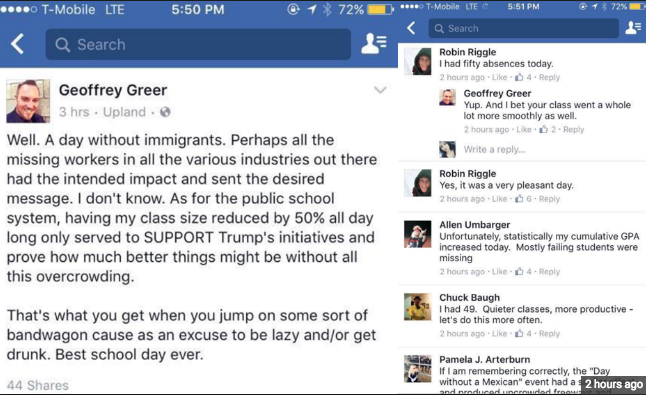
Recently, a group of high school educators in Southern California were placed on administrative leave for their response, via social media, to their students participating in a ‘Day Without Immigrants’ on February 16, 2017. Their school’s students were just part of thousands of students - across the state and nation - that stayed home that day in order to demonstrate solidarity with adults in their communities who stayed home from work to demonstrate the fiscal impact immigrants and immigrant families have on our local, regional and national economies.
Although since deleted, at least five high school teachers and one counselor, posted messages on Facebook celebrating that so many Latino students missed classes that day. These posts included comments about the students being ‘lazy’ and ‘drunk’, or that the cafeteria ‘was cleaner without them.’ (see entire story here: Teachers put on leave for 'Day Without Immigrants' social media posts and sample of posts below)

Screen Shot 2017-02-21 at 11.20.20 AM.png


Naturally, it seems most educators, as well as many parents, students, and community members, could find several things wrong with what these educators did. Yes, they are being reprimanded. And yes we don’t know what their final discipline may include. But regardless of the formal results of their actions, what are the long-term repercussions and collateral damage as it relates to education?
Personally and professionally, I am outraged to share the same profession as these educators. To me, their actions represent everything that is the polar opposite of what it means to be an educator or leader of our youth. In addition to hurting those students, their school and their community, they also hurt the profession and the on-going work that caring, innovative educators are doing every day.
Here are some of the real effects of their actions as I see it:


  1. The Real 3 R’s (Relationships, Respect & Role Models): As we know by now, education is a relationship business built on mutual respect and understanding. Nothing empowers learning more than strong, healthy educator-student relationships. Inversely, nothing impedes learning more than strained or damaged relationships. Many of us work tirelessly to show respect to our students, to demonstrate sincere care for our students and to earn their professional trust. These are all set back each time an educator behaves like these six did. All educators need to cherish and protect our unique position as role models. Once students do not believe in us, they are in jeopardy of not believing in themselves. We are employed and deployed to inspire, not degrade. Adults, especially often educators, request that young people respect them. Well, respect is certainly a mutual thing. So, these six educators demonstrated a total lack of respect, or egregious disrespect, These educators have crossed one of the most sacred professional thresholds - ignoring the real 3 R’s. These six educators may have individually and collectively lost the connection to these students forever, as well as influenced how they interact with all of their future educators.
CT3_Relationships.png
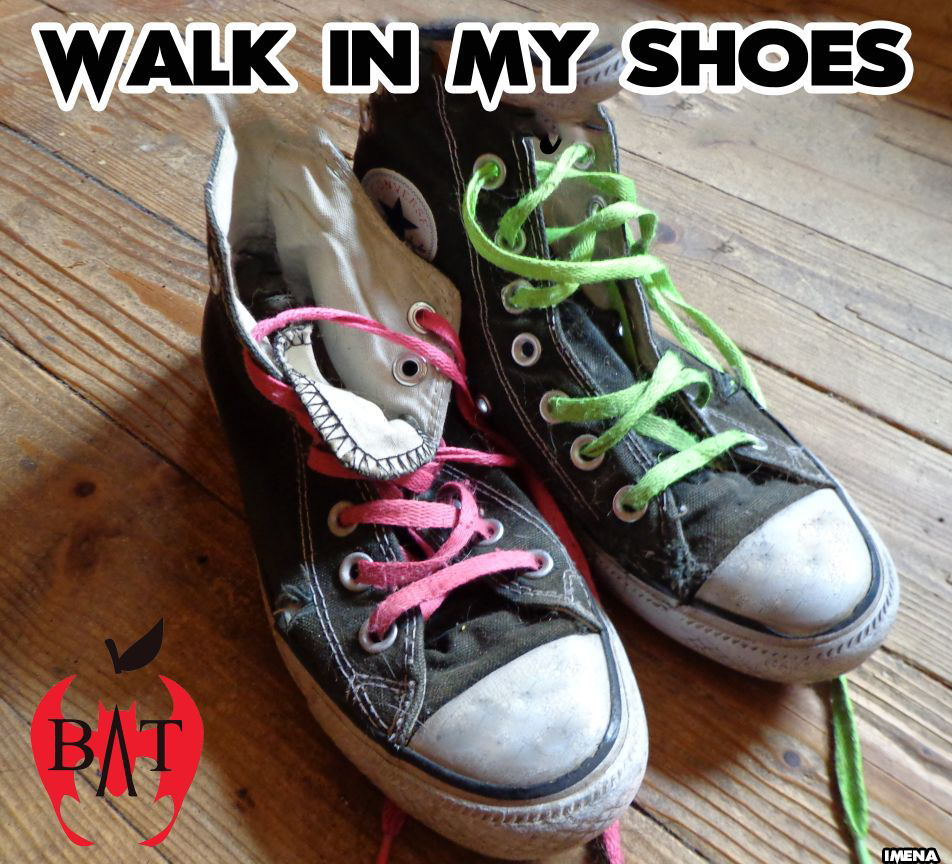
  1. Walking In Our Students’ Shoes: Regardless of our students’ backgrounds, our mission should be to try to understand them, to walk in their shoes if you will. Compared to us, they may have different ethnic backgrounds, religious practices, socioeconomic circumstances, medical situations, family dynamics and more. In order to educate them, we must understand them. In order to optimize their learning, we should be working tirelessly to see things from their perspective.  When we dismiss their views or their experiences, we minimize them. It’s hard to maximize learning, if you are minimizing the heart or soul. ‘The Day Without Immigrants’ would have been a perfect opportunities for us educators to find out more - more about our students, their families, their friends, their neighborhoods and their collective experiences.
Walk in my shoes fix.png


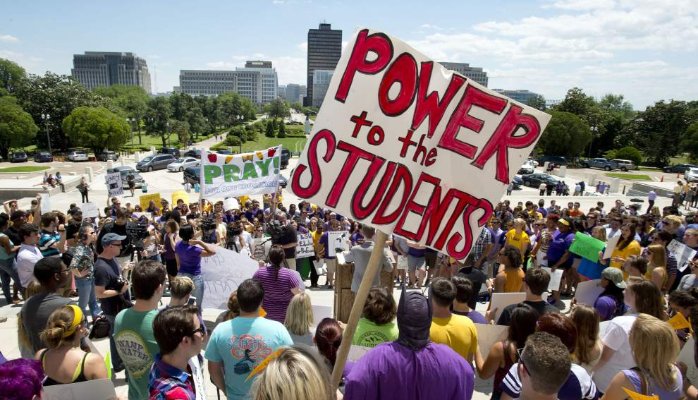
  1. Promoting Student Voice / Activism: It’s simple. We should be encouraging our students to become active politically, socially, culturally and intellectually in their communities. We don’t need to direct them to a certain cause, but rather challenge and encourage them to get involved in the causes of their choice. We may not agree with their position or their choice of how to express it. Many of us may think that missing school one day does not help any cause or affect any real change. It may or may not. Only history can tell. But that’s not the point. We should remind our students that they have a powerful voice and let them use it. We need to agree that they can and should have a position. As a former media teacher, I find student voices to be paramount in terms of lifelong learning. As a proponent of project-based learning, I see the higher level learning opportunities available when students pursue challenges and issues that they are personally affected by or indeed interested. Our democracy and economy depend on students becoming the voices and leaders of the future. These educators' social media posts should have been things like; “I’m so proud of my students today” or “I learn from my students everyday through the struggles they face.” It’s funny how adults sometimes criticize young people for not caring enough, but then often trivialize or degrade them when they care about something.

activism.jpg


  1. Educators Need 21st Century Skills Too: This breach in judgement from these educators demonstrated a lack of skills in several areas. One, we need to call out Social Media as a New Literacy. We not only need to teach our students, but the adults too, that what we say on social media can have tremendous impact - both positive and negative. We need to be aware of our responsibility online and how our digital footprint is formed daily with our digital behavior. Those six educators negatively branded not only themselves, but their school, their district and their community - as well as the profession in general. Additionally, if we want students to become critical thinkers, we can’t put them down when they begin to question, challenge or take a stand. We say collaboration is key and employers do as well. So when students join a cause, we need to applaud their attempt at greater and broader collaboration. Ironically, “A Day Without Immigrants,” in terms of student participation, was truly a viral thing demonstrating their ability to communicate and connect with the larger world around them. These are all skills of our new economy and 21st century classrooms. We need to teach these to our adults, as well as our students.

Social-media-as-literacy.png


  1. Perpetuating Fear: In the end, this particular event is really part of a larger social, political and cultural struggle taking place in our country. Whether it’s immigration, immigrants, racism, cultural awareness, individual rights, mutual respect or more, we need to acknowledge that that our students, like us, are part of something larger. Many of our students are afraid right now. We have families being divided and torn apart. We have students and parents across the country each and every day asking their schools for emotional and physical support. So, when these educators lashed out on social media against their students, they not only demonstrated ignorance and disrespect, but also fear. They revealed their own personal fears while also not acknowledging their students’ fears. They ultimately sent a message to their students to be silent and live in the shadows. They encouraged all of us to fear each other more instead of embracing one another more. They moved us all backwards through fear instead of forwards through acceptance.
Screen Shot 2017-02-21 at 7.43.09 PM.png


Like I said in the beginning, I don’t know what will ultimately happen to these six educators. And maybe they will learn some real lifelong lessons from their students. If I were their principal or superintendent, I would consider many things including dismissal if it were possible. One thing that I would do for sure is have all of them spend some considerable time with their students and listen to their stories. Maybe these six educators can start a brand new movement where they embrace student voice through a social media campaign. Today, I am angry at them. I hope tomorrow that I can envision their ultimate redemption. I’m sure all of you have some ideas too.


(photos courtesy of Foter, Pixabay and Public Domain Photos)

Flipped Learning.....What About Flipping Off Learning?

At the end of 2016, we were presented with a different type of story about the end of a semester. Instead of stories about finals, celebrations, grades or even holiday events, we heard a story about “quitting.” That’s right - QUITTING. It wasn’t about an educator quitting either. It was about a student quitting.
Screen Shot 2017-01-30 at 2.22.29 PM.png
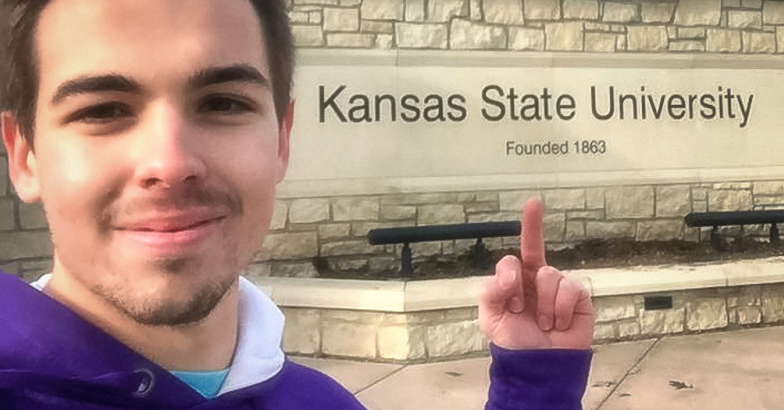
Kansas State University Freshman Billy Willson finished his first, and his last, semester right before the end of 2016. In a Facebook post, he announced that he was dropping out, despite having earned a 4.0 grade point average. According to Willson, he was going to start his own business and learn more from that experience than anything he could hope to do at Kansas State, or any other higher institution for that matter.
He simultaneously set off a couple of controversies. One, he ran a photo of himself giving the finger to Kansas State which angered many in the education community who labeled him a spoiled and profane millennial. But more importantly, he also set off an even larger debate about the on-going question of the value of college and education in general.
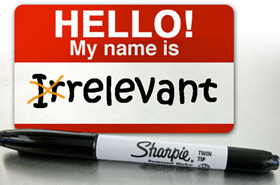
Willson screamed out on Facebook call to action to his peers and let them know, “You are being scammed.” He went on a litany of issues related to the high cost, debt, textbook costs, poor instruction, outdated general education and more. But what he was really going after was RELEVANCY.
Screen Shot 2017-01-30 at 2.37.29 PM.png
The day has finally come. Educators and leaders have been talking about relevancy forever. Students have too, but less formally. But they are now drawing the line and creating a new front line in education. They are not afraid to use any means to let all of us know that our systems are not working and indeed failing them. When your customer thinks your product stinks and is not helpful, then the funeral march begins.
Indeed, Willson said he did the dramatic photo and used social media to draw more attention to the issue. He was not just doing this for himself, but rather he was challenging others to abandon the system as well.
Screen Shot 2017-02-01 at 7.11.00 AM.png
I have long been a proponent for student voice and choice. But I think we all need to begin to pay a lot more attention. Despite what some may believe, today’s students are more savvy, connected, enlightened and purposeful than ever before. They are aware that our systems are obsolete and they are not afraid to call us on it. That is not to say that we don’t have innovative, relevant educational programs out there. We do and there are some satisfied students finding their education relevant. However, if take higher education, for example, more and more students are questioning it, or even rejecting it. And they are not doing so because they haven’t played the game to qualify to get there. They have played the game and realize it is just that. It’s not going to get them where they want to go and they are not going to stand for it.
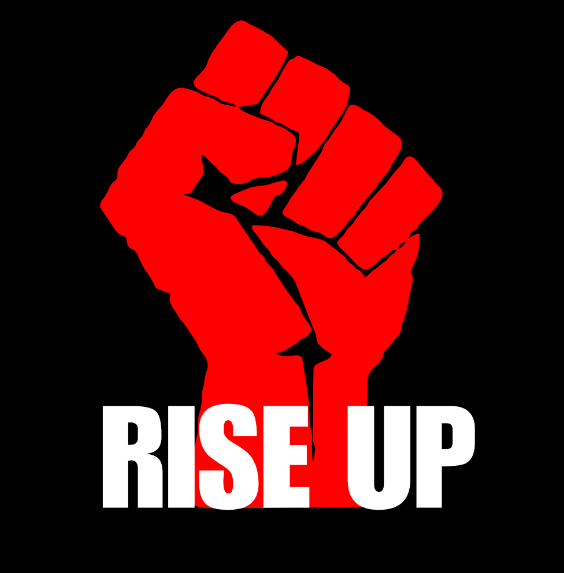
I have long argued that our system (s) won’t truly change or evolve until students essentially rise up and demand it. I know many in the field are trying, but the system (s) move slow and each student generation grows more impatient.
So, what should our system(s) response be to these concerns? In many cases, there are lots of people trying. We have lots of educators at all levels of education working hard to create new educational experiences for students that are engaging and ultimately relevant. But here are some things we can continue to do more and re-visit until we see wholesale changes:
Screen Shot 2017-02-01 at 7.26.05 AM.png
  1. Connect Education / Educators To Career: Address the disconnect between education and careers. Too many of our students are completing degrees and programs only to find that they are not effective, or even irrelevant once again, when it comes to finding meaningful and professional employment. Only half of the students who are attending our universities are completing with a bachelor’s degree. Of those, only half are finding employment that required that education. And the average time to complete that four-year degree is six years. And the cost, oh my god the cost. We need to educate all of our educators how flawed the current dominant paradigm is. We need to make all education, K-16 and beyond, about connecting learning to career. Career Preparation can not be a side project or afterthought. It has to be foundational in order for increased educational and economic success, as well as the means to be relevant to all.
              Screen Shot 2017-02-01 at 7.24.37 AM.png
  1. Revamp General Education - It is becoming very frustrating to our college students, who are paying a lot of money and finding new global employment challenges, to embrace the general education course requirements. After all, they study most of these subjects several times in their K-12 education. We can argue all day long about the benefits of a liberal arts education. But given all we’ve already established, it’s lost on the students. What if we made their courses relevant to their majors? What if their English or Communication classes connected to their major or career interest? What if the social science classes were history of their career area? What if the math was stats class about their chosen career? You get the idea. We either need to drop it or change it. If we don’t, more and more will walking away like young Billy Willson.
Screen Shot 2017-02-01 at 7.23.06 AM.png
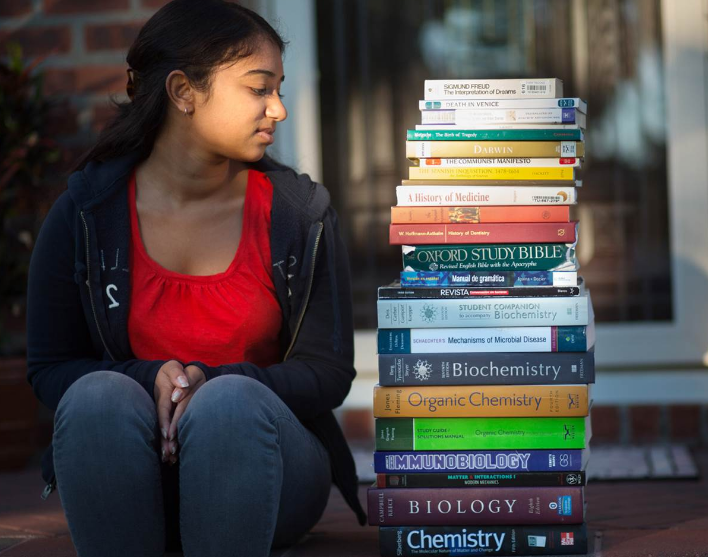
  1. Ditch The Textbook Forever - According to the College Board, the average college student spends an average of $1,200 a year on books and supplies. A single book can cost $200 or more. And it’s not just about the cost. Whether digital or not, we now have the online resources for students to access any and all information that we need for any subject or area of study. The textbook paradigm is problematic in two ways: (1) they are directly related to dying and irrelevant instructional model and (2) they are connected to an entire publishing industry with less than noble goals. If we ditch textbooks - print or digital - we will not only save our students money, but fundamentally change teaching and learning for the better.
pbl.jpg
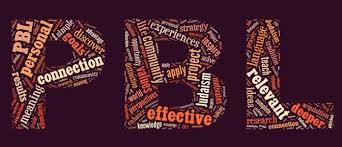
  1. PBL For All (Customize, Personalize & Innovate)  - Project-Based Learning needs to become the dominant pedagogy for all educational endeavors. We need students to be able to take ownership of their learning path through choice, voice and relevant applications of learning. We already have many major universities and online/hybrid programs that allow students to mix and match courses based on their individual career goals, skill development and interest. Technology can help this, but as usual, the real challenge is mindset. Whether it’s K-12 or higher education, why can’t students choose topics, projects and areas of interest within a discipline? Why can’t they choose how they will present and share their findings? Why can’t they essentially, with mentors and advisers, map out an individual program of learning that allows them to customize and personalize their experience? I don’t just mean choosing some electives. I mean choosing what their courses look like, feel like and are like. I mean they would individually negotiate with their instructors their pathway within a course. Again, we have the means to do this, but do we have the will? Essentially, we need to be project-based learning K-16 and beyond. PBL allows for all of this and more.
skills.jpgmicrosoft_digital_certification_badges.jpg
  1. Not Just Degrees or Certificates - There is a movement now within education and training that is about the micro certificate. These are documentation of skill level in very specific areas of study. They are designed to give each student, as a professional, the ability to gain highly technical skills and have a way to demonstrate their skill on a standard platform. Whether it’s a digital badge representing a pro application certificate or an industry-specific one, it’s all the right direction. Our traditional bachelor’s degrees and associate's degrees are just as relevant to our students - both professionally in their careers and personally in their educational pursuits.


Naturally, I could go on and probably so could you. It’s not about completing the list per se, but rather about addressing the problem before it’s too late. The lives of our students, and our educational institutions, are both on the line. Both are relevant and need to be working together for the benefit of one another.